
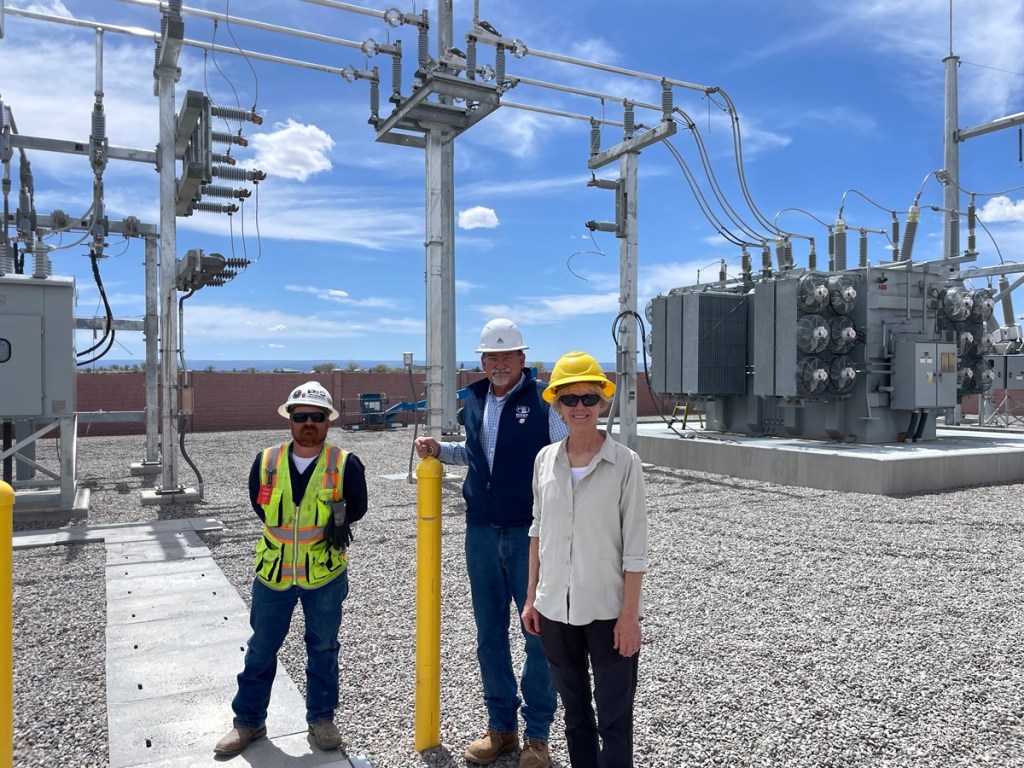
Co-authored with Delta County Commissioner Wendell A. Koontz. Previously published by the Delta County Independent, the Grand Junction Sentinel, and the Montrose Daily Press. Photo: Garnet Mesa Solar project.
In Washington, D.C., permitting reform has become a perennial debate. In Delta County, it became a test. When a local utility-scale solar proposal hit resistance, the people involved didn’t stall out — they worked it out. That kind of practical problem-solving is exactly what Congress should emulate as it works to fix the nation’s broken permitting system.
The two of us come from different sides of Colorado’s energy story. One of us is a county commissioner and former coal-mine geologist who’s spent decades making sure resource projects are done responsibly and the land reclaimed afterward. The other is a clean-energy advocate who’s spent years lobbying Republicans and Democrats in Congress to pass bipartisan climate solutions.
What we share is frustration with how long it takes to get anything built — and the belief that local problem-solving can show Congress how to do better.
In 2021, an out-of-town developer proposed building the first large-scale solar facility in Delta County. Neighbors worried about losing productive farmland. After vigorous public hearings, the County Commissioners voted it down. Commissioner Koontz was the swing vote that denied the permit.
Instead of walking away, the developer came back with a new idea. Working with the county and a local rancher, they redesigned the project as an agrivoltaic facility that blends solar generation with irrigated grazing. It became one of the largest and most ambitious agrivoltaic projects in Colorado. The revised proposal included engineered irrigation systems, rotational-grazing plans, and bonding for landscaping and decommissioning. On July 13, 2022, the Commissioners approved it unanimously.
Today, the Garnet Mesa Solar facility generates enough clean electricity to power 18,000 homes while sheep graze beneath its 176,850 panels. A rancher who once feared losing her livelihood now has steady pasture and income. The developer earned trust by adapting and investing in the community. Alluvial Power and Delta County showed that collaboration can make progress possible. The project is expected to generate $13 million in property-tax revenue over the next 15 years and provide stable electricity rates for local co-op customers.
Garnet Mesa reinforces an important lesson: responsible energy development and environmental stewardship aren’t opposites. Disagreement doesn’t have to end in deadlock. When people roll up their sleeves instead of drawing battle lines, they can build both trust and infrastructure.
Utility-scale solar is new to Western Colorado’s rural landscape. County permitting rules had to evolve to ensure this new type of industrial development fit local values and benefited the community over the long term. For developers, the rules had to be sensible, workable, and affordable. Delta County built a modernized process people could trust. That’s exactly what national permitting reform should deliver.
While Delta County updated its rules to meet modern challenges, the federal system remains mired in red tape – overlapping reviews, outdated procedures, and lawsuits that drag on for years, adding uncertainty and cost. Modernizing the process means clarifying what gets reviewed, incentivizing robust community engagement, setting fair limits on litigation, improving transparency through digital tracking, and coordinating across agencies and jurisdictions.
With electricity demand rising faster than supply for the first time in decades, Democrats and Republicans alike recognize that our energy future depends on building faster, smarter, and responsibly. This isn’t a left-versus-right problem. It’s a national capacity problem.
Delta County did what Congress now must: craft modern rules that balance development, conservation, and community needs. It’s time for Washington to do its job and bring the federal system into the 21st century.
If rural Colorado can bring farmers, ranchers, solar developers, and local government together to get a project built right, surely Congress can fix federal permitting – because the longer they wait, the more we’ll pay in higher utility bills, stalled projects, and lost trust.
 Powering Forward
Leave a comment