
Previously published by the Grand Junction Sentinel.
Craig. Montrose. Rifle. Grand Junction.
For four years, an unusual energy conversation has moved through Western Colorado, stopping each year in a community with its own relationship to the energy that powers our state.
The politics surrounding that conversation have changed over the years. The conversation itself has not.
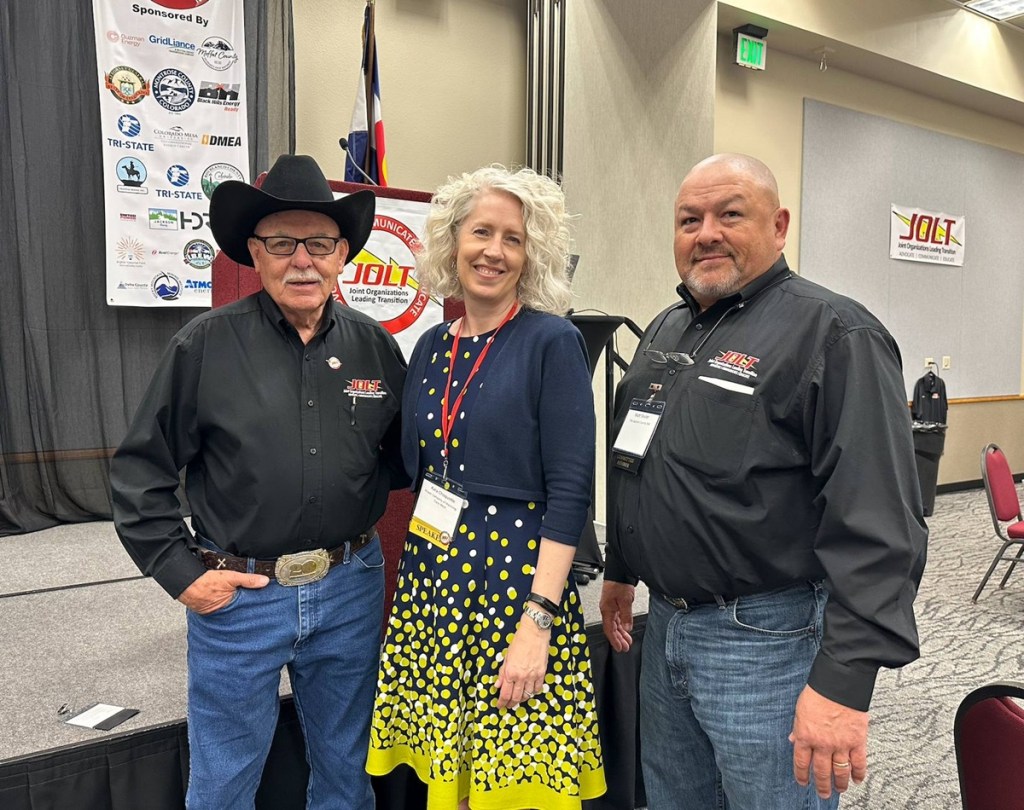
When Colorado’s coal transition hit the community of Craig in 2020, it felt like a jolt. Rather than spend the next decade fighting what was happening, a group of Western Colorado leaders created Joint Organizations Leading Transition (JOLT) to advocate, communicate and educate about an all-of-the-above energy future.
I attended the first JOLT Summit in Craig in 2023. I’ve returned every year since.
Craig was an appropriate place to start. The scheduled closures of Craig Station and the nearby coal mine weren’t an abstract debate about climate policy. They meant lost jobs, tax revenue and a very different future for a community that’s helped power Colorado for generations.
JOLT brought together an unusual mix of people: coal workers and renewable developers, state officials and nuclear experts, Republicans and Democrats, climate advocates and mining interests, utilities and regulators.
The agenda for this unique energy event featured top-notch speakers, blending education about alternative energy sources with conservative critiques of Colorado’s mandated greenhouse gas reduction goals. We heard about the 18-year effort to permit and complete the TransWest Express transmission line that crosses Colorado near Craig and will replace some of the lost tax revenue. Idaho National Lab spoke about coal-to-nuclear conversions. Guzman Energy spoke about utility solar. Several sessions focused on mining, including a vigorous defense of coal. The meeting concluded with a tour of Craig Station.
When I attended the first JOLT in 2023, I’d been advocating for bipartisan climate policies for seven years, but I’d never experienced an energy meeting like that before. The organizers designed JOLT to showcase the opportunities and risks of Colorado’s energy transition, to create a friendly space where those on different sides of an issue could learn from each other, and to empower people without starting arguments.
That spirit has followed JOLT from town to town.
In 2024 JOLT met in Montrose, adding sessions on geothermal, workforce transition, funding opportunities for low-carbon projects, and a keynote titled “Inconvenient Energy Realities & Climate Policy Debates”.
The 2025 meeting in Rifle included briefs on energy poverty, agrivoltaics, and integrated energy systems. Wyoming Governor Mark Gordon urged us to focus on solving problems we agree on rather than rehashing our disagreements. Utility managers talked about the challenges they face in meeting affordability, reliability, decarbonization, and just-transition goals – all at the same time.
This year, JOLT moved to Colorado Mesa University in Grand Junction. The conversation evolved again, covering our changing utility sector, transmission constraints, local land use, permitting reform, new generation, and a bipartisan panel on state energy policies.
The larger energy conversation has evolved, too.
In Craig in 2023, questions about firm power, nuclear, natural gas, permitting and community economics sounded like challenges to the dominant clean-energy narrative. By 2026, many of those questions are part of mainstream state policy discussion. Nuclear power now qualifies as clean energy under Colorado law. Utilities openly discuss firm generation and electrification constraints. Democratic leaders are talking about rural trust and community buy-in.
JOLT didn’t cause that evolution. But it gave Western Colorado a forum in which to talk through the tradeoffs and it connected people who subsequently carried those ideas into state and federal policy discussions.
The coming years will bring another governor, new legislators, growing electricity demand and technologies we can’t fully predict. The political pendulum in Washington is likely to swing again, too.
We’re in the messy middle of an energy transition that affects everyone differently. JOLT’s most important accomplishment isn’t agreement about what Colorado’s energy future should look like, but a better way for us all to figure it out.


Leave a comment